1. Introduction: A Bizarre and Deadly Reality
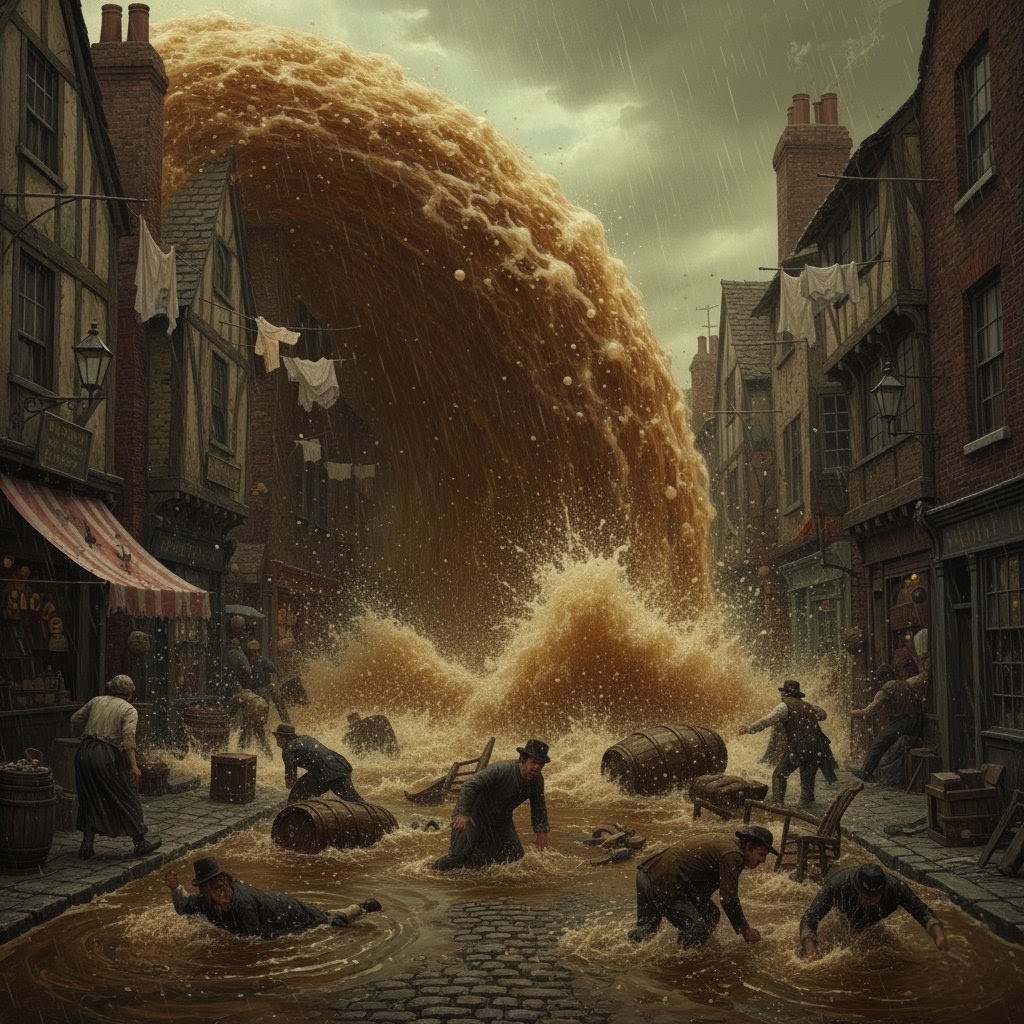
Imagine being swept away by a 15-foot wave. Now imagine that wave is made of beer. For the residents of one London neighborhood in 1814, this wasn’t a bizarre dream but a shocking and deadly reality. The surreal image of a beer tsunami is often where the story begins and ends, but the truth of the event is far darker and more complex than its strange premise suggests.On October 17, 1814, at the Meux and Company Brewery in the parish of St. Giles, a catastrophic industrial accident unleashed a torrent of porter into one of the city’s poorest districts. This was not a comical mishap; it was a fatal disaster that claimed the lives of eight people, exposed the stark social inequalities of the era, and ultimately changed an entire industry forever.This article explores the most surprising and often overlooked truths about the Great London Beer Flood, moving beyond the bizarre headline to reveal a story of immense tragedy, questionable justice, and the forgotten history that lies just beneath the city’s streets.
2. The Sheer Scale of the Wave Was a Force of Nature
The disaster began with a single, ominous sound. At Meux & Co’s Horse Shoe Brewery, a massive iron hoop snapped off a 22-foot-tall wooden vat. The tank, which held over 135,000 gallons of ten-month-old porter left to mature, exploded about an hour later. The initial blast triggered a catastrophic domino effect, bursting other vats and barrels in the brewery. In total, more than 320,000 gallons of beer were released.This wasn’t a gentle leak; it was a violent deluge. A 15-foot-high wave of porter erupted from the building with enough concussive force to obliterate the brewery’s 25-foot-high back wall, which was two-and-a-half bricks thick. The torrent of beer, timber, and rubble swept into the surrounding streets, creating a scene of utter devastation. As one newspaper reported at the time, the destruction was absolute."...the surrounding scene of desolation presents a most awful and terrific appearance, equal to that which fire or earthquake may be supposed to occasion."
3. It Wasn’t a Drunken Party—It Was a Deadly Tragedy in a Slum
Modern accounts sometimes paint a picture of locals joyfully scooping up free ale, but contemporary reports tell a different story. The flood didn’t strike a prosperous neighborhood; it crashed into the St. Giles “rookery,” a desperately poor and densely populated slum. Families, many of them Irish immigrants, were packed into crumbling tenement buildings and inhabited basements, which stood no chance against the flood.The human cost was devastating. Eight people were killed, all of them women and children. The victims were not drunkards but the city’s most vulnerable, caught in the path of the disaster:A wake was being held in a basement for a two-year-old boy when the flood struck, killing his mother, Ann Saville, and four other attendees: Mary Mulvey, her three-year-old son Thomas Murry, Elizabeth Smith, and Catherine Butler.In another home, four-year-old Hannah Bamfield was having tea with her mother when the wave struck. Her mother was washed into the street and survived, but Hannah was killed.Eleanor Cooper, a 14-year-old pub servant, was buried under the brewery’s collapsed wall while washing pots in the pub’s yard.This context reframes the event from a quirky historical anecdote into a heartbreaking story of a community’s tragedy.
4. Despite the Obvious Cause, the Official Verdict Was ‘Act of God’
In the aftermath, the brewery was taken to court and a coroner’s inquest was launched to determine the cause of the eight deaths. Witnesses described the vat bursting and the subsequent flood, pointing to a clear industrial failure. Yet, the jury’s final verdict was that the victims lost their lives “casually, accidentally and by misfortune.” This ruling declared the disaster an “Act of God.” The shocking implication was that no single person or entity was held legally responsible. Meux & Co., despite the failure of its equipment, was cleared of any wrongdoing and was not required to pay any compensation to the families who had lost their homes, possessions, and loved ones. This verdict highlights the vast difference in industrial safety standards and corporate accountability between the 19th century and today.
5. The Company Got a Bailout While the Victims’ Families Relied on Charity
The disaster was a significant financial blow to Meux & Co., costing the company an estimated £23,000 in lost beer and damages. However, while the victims’ families received no official compensation, the brewery received government assistance. To save the company from bankruptcy, it successfully petitioned Parliament and was given a tax rebate of about £7,250 for the excise duty it had already paid on the destroyed porter.In stark contrast, the families of the deceased were left to fend for themselves. They relied on public donations gathered in the wake of the tragedy. In a macabre effort to collect money for funerals, some families laid out the bodies of their loved ones in their homes for public viewing. During one such viewing, the compounding tragedy of the slum was put on full display: the floor of the room collapsed under the weight of the spectators, plunging everyone waist-high into a beer-flooded cellar.
6. This One Bizarre Flood Changed Brewing Forever
While the immediate justice was lacking, the London Beer Flood had a lasting and profound impact on the brewing industry. The sheer destructive power of the burst vat demonstrated the inherent risks of using enormous wooden fermentation tanks.As a direct result of the accident, the industry gradually began to phase out these giant wooden vats. Over time, they were replaced with more stable and reliable lined concrete vessels, a change that significantly improved safety in breweries across the country. The Horse Shoe Brewery itself continued to operate for over a century before it was finally demolished in 1922. Today, the Dominion Theatre stands on the site where the flood began.
Conclusion: The History Beneath Our Feet
The London Beer Flood is one of history’s strangest disasters, but its legacy is a serious story of tragedy, social inequality, and industrial change. It reminds us that behind the bizarre headlines of the past often lie profound human stories.The next time you walk past the Dominion Theatre on Tottenham Court Road, remember the events of 1814. The ground beneath your feet is not just the site of a former brewery, but the scene of a forgotten tragedy. It begs the question: how many other forgotten stories lie just beneath the surface of the cities we walk through every day?
About The Author
